Explore the Black and Pine Kitchen, where original heart pine floors set the direction for cabinetry, color and restoration decisions throughout the room.
April 16, 2026
The best decision in this kitchen was a decision not to do something.
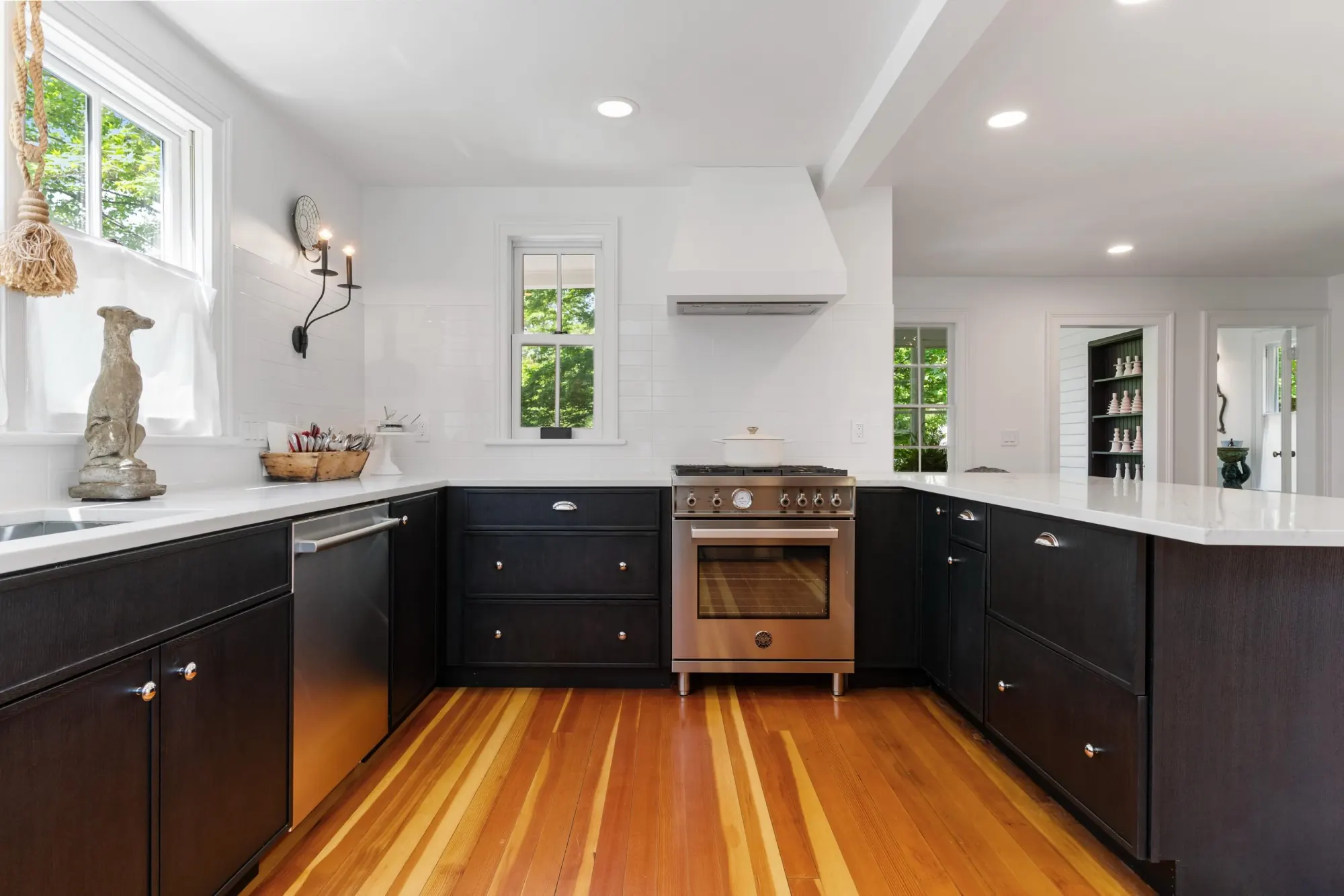
The house had original heart pine floors running through the kitchen, with worn boards and darker traffic paths. We kept them and planned the rest of the room around their color and grain.
Why the floors stayed
Reclaimed heart pine can still be sourced. What could not be recreated here was the character and history of these original boards. Keeping them allowed their color, wear and dimensions to remain part of the room's design.
The floors were refinished rather than replaced. Heart pine needs care during sanding because the wood is soft and the remaining thickness varies. The aim was a clean, protected surface that retained the marks of its age.
What that gives you is a floor with actual depth of color, warm orange-brown with darker grain, which then dictates the rest of the palette. A busy floor wants a quiet room.
Black, white, and one warm thing
The scheme is essentially two colors plus the floor.
The island is ebonized. Ebonizing is a dark finish that keeps the wood grain visible rather than covering it, which matters in a room where the other major wood surface is a hundred-year-old floor. A painted black island would have read as a solid block. An ebonized one has depth in it and talks to the floor.
The counters are white quartz. This was a practical decision as much as an aesthetic one. Quartz is non-porous and does not need sealing, does not etch the way marble does, and in a working family kitchen it tolerates a level of daily use that a softer stone would show. Against the black island and the warm floor, the white does the job of keeping the room from getting heavy.
The walls are subway tile. There is a reason subway tile has survived every cycle of kitchen fashion for a century: it is cheap, it is durable, it is available everywhere, and its proportions are right. In a room where the floor and the island are both doing something, the backsplash is not the place for a third idea.
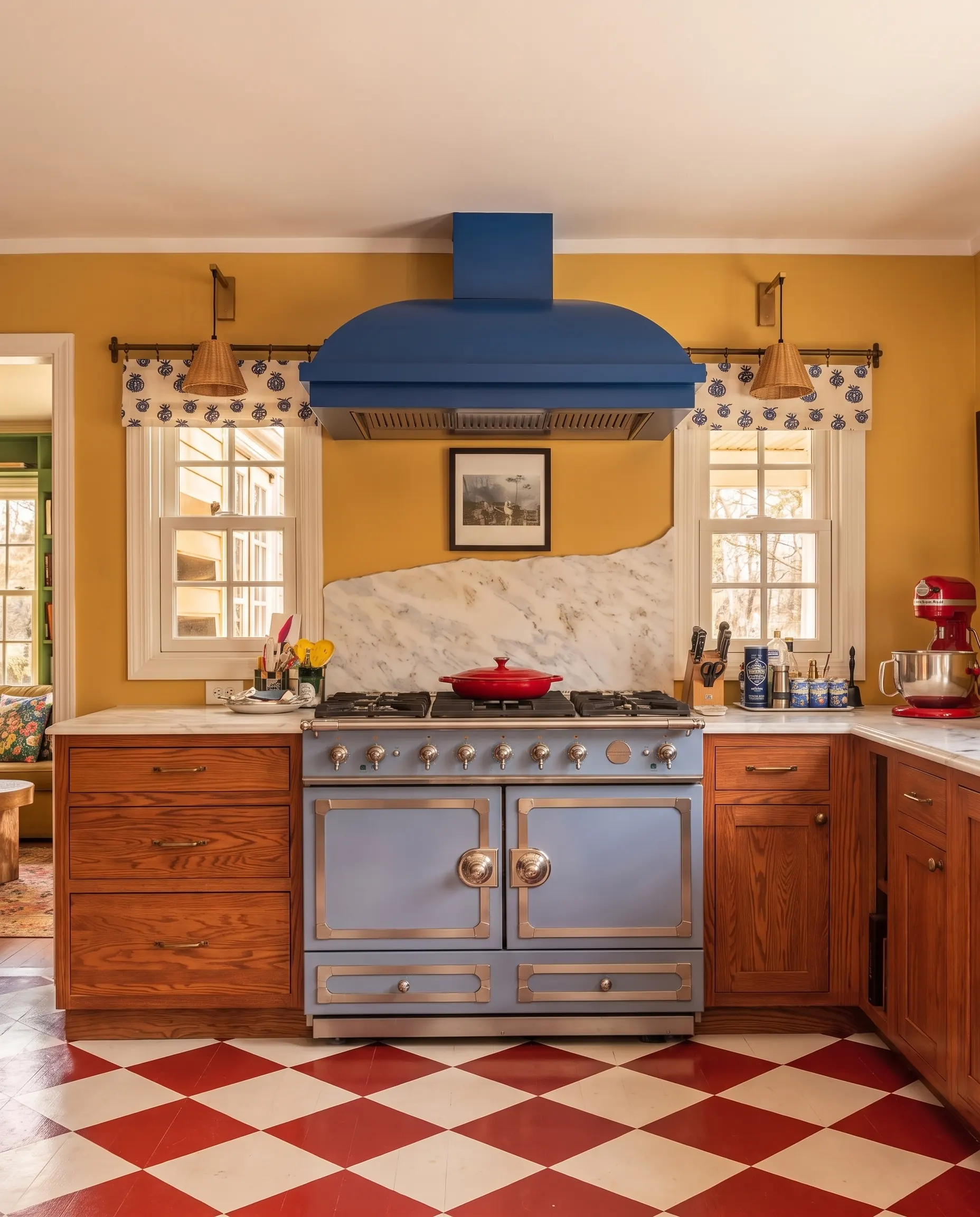
The Mustard Kitchen works because three bold decisions were made confidently and supported by quiet materials. This one works because one irreplaceable thing was protected and everything else was chosen to serve it. Both are deliberate. Neither is a default.
Giving one material the lead can make the other choices easier. Here, the floor set the direction for the cabinetry and color. It gave the room a starting point.
Notes for anyone with old floors
Assess before you assume. A floor that looks finished is frequently not. Worn finish, surface marks and darkened traffic paths are all surface conditions. Structural damage, extensive cupping, and boards already sanded to the nails are not. Get someone who works with old floors to look before you plan around replacement.
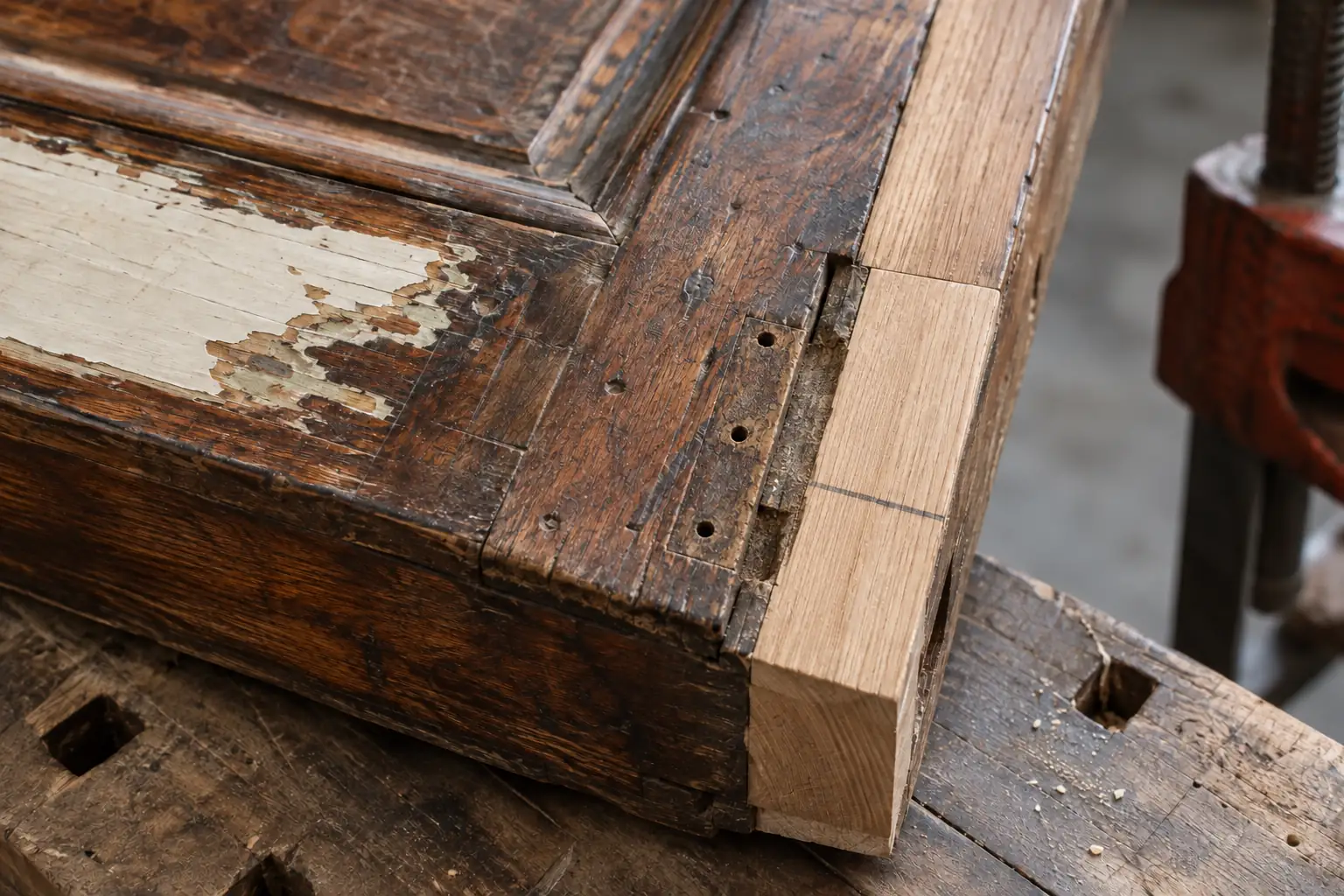
Refinishing old softwood is a specialist job. It is not the same as refinishing oak, and a crew that treats it the same will take too much material off. Ask specifically about experience with heart pine.
Plan the sequence. Floors that are staying need protecting through demolition, mechanical work and cabinetry installation, then refinishing near the end. That is a sequencing decision with cost implications, and it belongs in the schedule from the start, not as an improvisation in month three.
Know what you are keeping. A refinished hundred-year-old floor will still show wear. Discuss sample repairs and the expected finish before committing to the work.
We renovate kitchens across Fairfield County and Westchester, and we are always glad when a house still has something in it worth keeping.