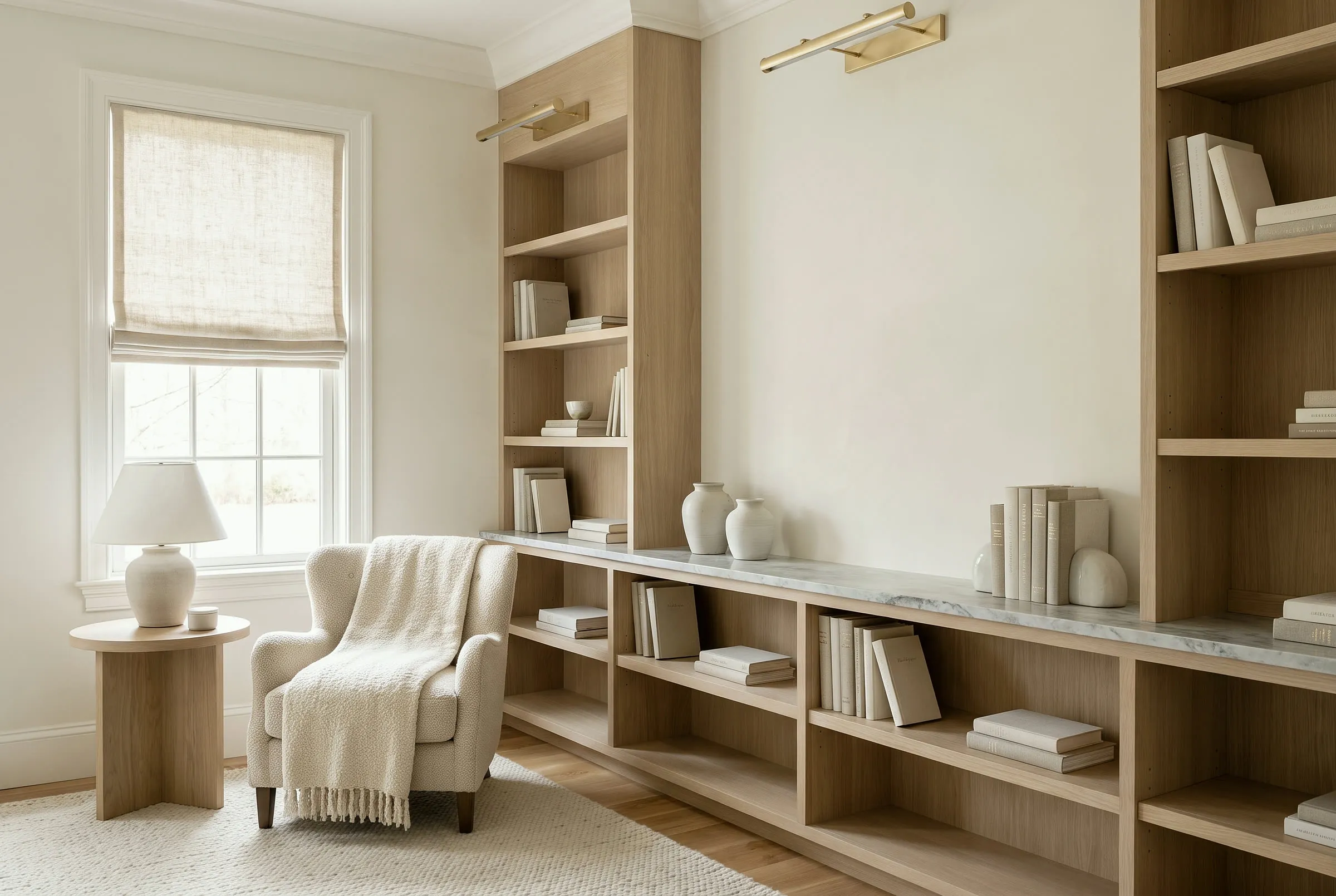
Deciding whether to renovate or move? Weigh the lot, location, layout, renovation scope and disruption before spending on a house that may not fit your needs.
August 20, 2026
Homeowners often ask whether to renovate or move. We build renovations for a living, but that does not make renovation the right answer for every house. The location, the building and the changes you need all matter.
This is a way of thinking about it, not financial advice. Your accountant and a good agent should be in this conversation too.
Start with what a renovation cannot change
Most things about a house are negotiable. A few are not, and they are the ones worth testing first.
Location. The street, the commute, the school, the neighbors, the view. No amount of work changes any of it.
The lot. Its size, its orientation, its slope, how much of it you are allowed to build on, and how the light falls across the day. You can reshape a house on a lot; you cannot reshape the lot.
Some structural realities. Ceiling heights on the existing floors, the basic structural grid, whether there is a basement worth having. These can occasionally be changed, but the cost of doing so is usually the moment people start reconsidering.
If the thing that frustrates you most is on this list, renovation is the wrong tool. That is worth knowing before you spend six months designing one.
What a renovation is genuinely good at
Almost everything else. The plan, the light, how the rooms relate, the kitchen, the baths, the systems, the insulation, the finishes, the relationship between the house and the garden. A house with a good location, a good lot and sound structure is usually worth working on, because you are buying the part that cannot be bought.
The comparison people get wrong
The instinct is to compare the renovation cost against the price difference between your house and the one you would move to. That comparison is usually incomplete in both directions.
A move brings transaction costs, moving expenses and possible work on the next house. Compare those costs with a realistic renovation scope, including temporary accommodation and the disruption of building.
Renovating carries costs that are equally easy to leave out: the disruption, the time, and the possibility of discovering something behind a wall that changes the number. On a hundred-year-old house that possibility is not remote.
The questions that usually settle it
Ask whether the thing you want is fixable, and test that against the list above before anything else.
Think about how long you intend to stay. A renovation you will live in for fifteen years and one you will live in for three are different decisions, and not only financially.
Check that the house is sound where it matters: structure, roof, envelope and drainage. Cosmetic problems are cheap relative to structural ones.
Decide whether you will live through the work or move out for it. That choice changes both the cost and the timeline more than people expect.
It is worth knowing whether the finished house would be the best house on the street, though that matters less if you are staying a long time.
When we say don't
We have told people not to renovate. Usually it is one of three situations: the constraint that bothers them is the lot or the location; the structure is compromised badly enough that the work becomes new construction with extra steps; or the scope has grown to the point where a new house on the same parcel would produce a better result for a comparable number.
That last one is worth saying plainly, because a renovation that keeps expanding eventually stops being a renovation. There is a point on most projects where the honest answer is to stop and reconsider, and a builder who will not say so is not serving you.
How to get a real answer
Get someone to walk the house who will tell you what they see rather than what you want to hear. The useful output is a clear statement of what the project is, what is likely to be behind the walls, and which of your frustrations it will and will not solve. The number comes after that.
Request a consultation and that is the conversation we will have. If the answer is that you should move, we will say so.
If more space is the deciding factor, compare building up with building out before assuming an addition is feasible.