Tadelakt
5 min
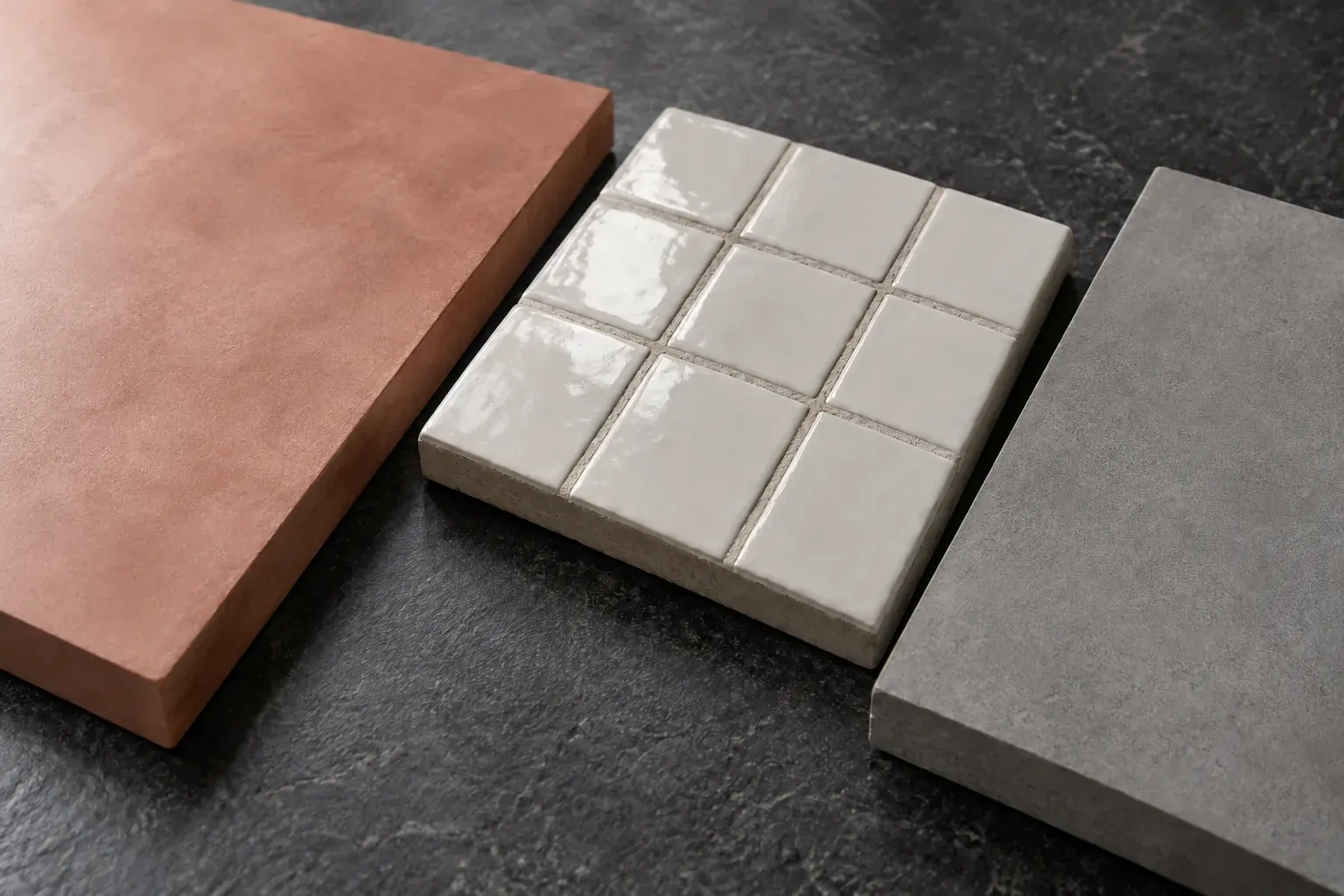
Compare tadelakt, tile and microcement for a steam shower: appearance, product suitability, maintenance and the water and vapor control each assembly requires.
Tadelakt, microcement and tile can each give a bathroom a very different character. For a steam shower, the first question is whether the specified products and the complete enclosure are suitable for that use. The finish is one part of the decision.
If you are choosing materials for a primary bathroom or steam shower, compare the actual proposed systems, samples and installed scopes. Broad material names will not tell you how the room should be built, cleaned or repaired.
Tadelakt is a burnished lime plaster associated with a soap-treated, water-repellent surface. Its appeal is the soft variation of hand work and the way large surfaces can read continuously across a room.
What to check: the exact plaster system, its permitted applications, its substrate requirements and the applicator's relevant experience. A water-repellent finish is not a substitute for waterproofing or vapor control. Required joints, drain connections and penetrations still need explicit details.
What to expect in use: a finish that needs compatible cleaners and product-specific protective maintenance. Review the care requirements with everyone who will look after the bathroom. A sample should establish the expected variation in texture and color, rather than promise a perfectly uniform wall.
Best reason to choose it: you value that hand-finished character and are comfortable with the specified care. Ask how visible a repair may be, which areas can be renewed and who will undertake future maintenance.
Microcement describes a family of thin decorative coatings. Formulations, primers, reinforcement and protective sealers vary. Some systems are intended for wet areas; that does not establish that every system is suitable for a steam shower.
What to check: obtain written confirmation for the proposed use from the selected manufacturer. Ask which substrates are accepted, how joints are handled, which coating and sealer are specified, and what water and vapor control the enclosure requires. An existing tiled surface also needs investigation before anyone promises to coat over it.
What to expect in use: cleaning, scratch resistance, recoating and repair depend on the actual system. Ask to see a finished sample with the proposed sealer, since that treatment can affect sheen and the feel of the surface.
Best reason to choose it: the approved system delivers the color and continuous appearance you want, with an installation and maintenance plan you understand. Compare floors and walls separately; permission to use a product on one does not establish suitability for the other.
Tile offers a wide choice of sizes, textures and materials. Ceramic, porcelain and natural stone have different properties, so the selection should be specific enough to evaluate cleaning, absorption, slip considerations and installation requirements.
What to check: the shower's waterproofing and, for steam use, the required vapor-control assembly. Tile and grout should not be treated as the complete waterproofing system. Confirm compatibility across membrane, setting materials, tile and grout with the relevant manufacturers.
What to expect in use: joints remain part of the appearance and care routine. Large-format tile can reduce the number of grout lines, but introduces its own handling and detailing questions. Natural stone may need particular cleaners or treatments. Replacing a damaged tile may be possible, but access, spare material and protection of the underlying assembly matter.
Best reason to choose it: you have found a specific material and layout that suit the room, supported by an installer who understands the intended assembly. Keep spare material from the same order and retain the product schedule.
Steam exposure makes vapor control, transitions and product compatibility particularly important. The design should identify the intended residential or more intensive use, enclosure dimensions, generator requirements, service access and details around the ceiling, door, bench and steam outlet.
For a manufacturer's example, Earthaus describes its tadelakt as breathable, not a vapor barrier, and requires a suitable steam-rated assembly. That guidance should not be read as approval of any arbitrary combination of products.
Our guide to planning a tadelakt steam-shower assembly covers the coordination questions to resolve with the project team. Obtain the relevant product instructions before the walls are built.
There is no useful universal ranking of these finishes by cost or durability. Compare quotations for the same room and the same level of preparation. A material that looks economical in a sample can require substantial work behind it.
Start with the bathroom layout and daily routines, then narrow the finish choices. If you are planning a bathroom in Fairfield County or Westchester, request a consultation to review the options against your actual house.