Tadelakt
4 min
Planning a tadelakt steam shower? Understand substrate compatibility, water and vapor control, drainage and details to coordinate before choosing the finish.
Almost everything written about tadelakt steam showers is about the plaster. The plaster is the last few millimeters. Everything that determines whether the room still works in ten years sits behind it, and it is the part nobody photographs.
This is what we are building when we build one.
A steam shower exposes its enclosure to water vapor as well as liquid water. How often it is used, its operating conditions and its construction all affect the design. A standard shower detail should not be assumed to suit steam use.
The important review happens before finishes are selected: confirm the intended use and a compatible assembly with the project team and the relevant manufacturers.
Framing and blocking. The plaster needs a stable substrate, and the structure must meet the requirements of the project and selected system. Plan support for benches, fittings, grab rails and door hinges before enclosure work begins.
Water and vapor control. The enclosure needs a continuous system designed for steam exposure, including sealed transitions and penetrations. Its location and compatibility with the substrate and plaster must follow the selected manufacturers' requirements and the project design. A generic list of separate layers is not an installation specification.
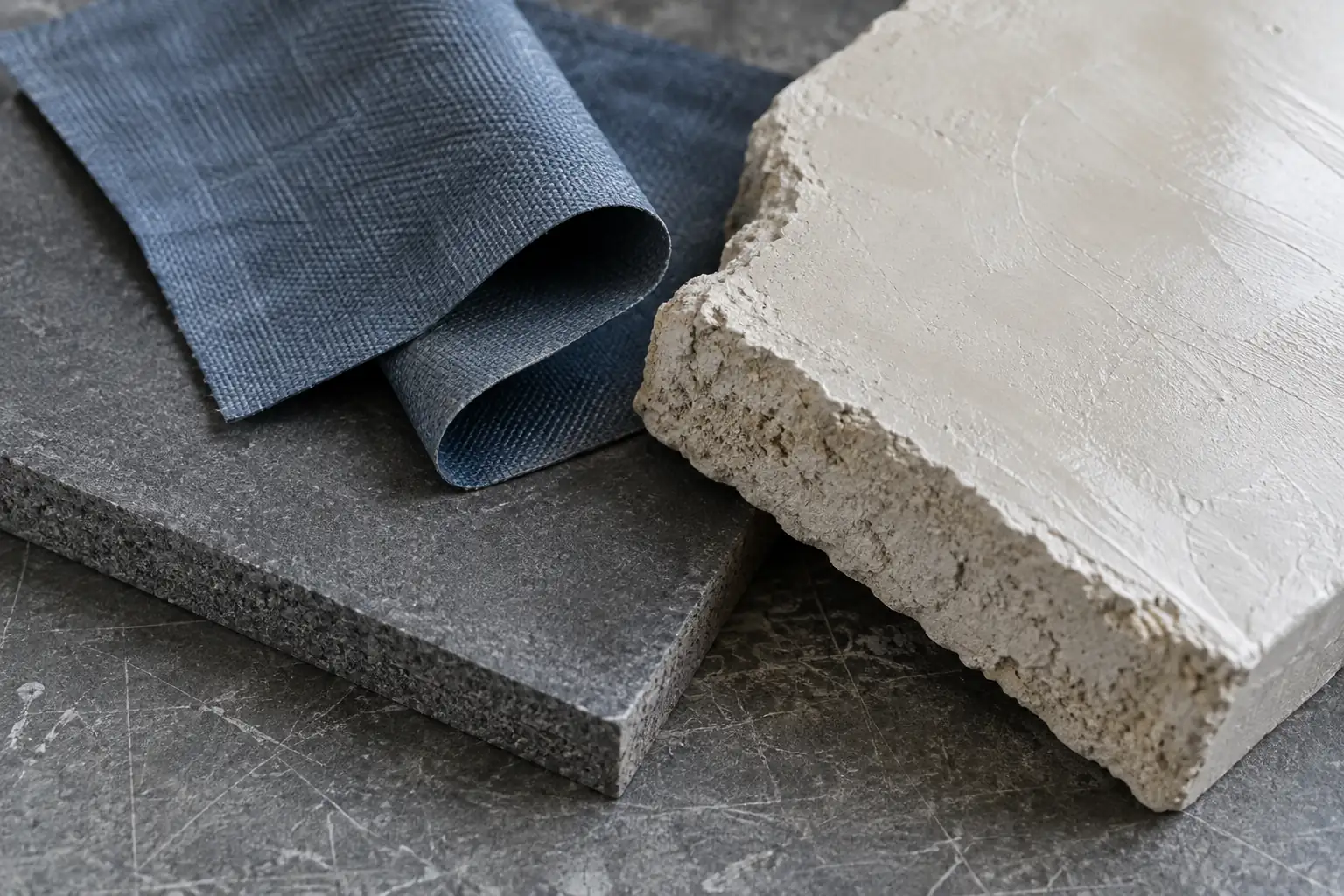
The substrate. A board suitable for wet conditions and appropriate for plaster, fixed to give a flat, stable, continuous plane. Joints treated. This is what the plaster keys to, and any unevenness in it will be visible in the finished surface, because a burnished lime finish is thin and hides nothing.
Compatible detailing. Coordinate the waterproofing, drain, curb, niches and changes of plane as one assembly. Tadelakt is a water-repellent finish; it does not replace the enclosure's waterproofing or vapor control.
Drainage and ceiling geometry. Coordinate falls, drain connections and horizontal surfaces with the chosen system. Check ceiling and condensate requirements with the enclosure and steam-equipment manufacturers, rather than assuming one slope suits every installation.
Then the tadelakt. Thin coats, compressed and burnished with stone at the right moment in the set, then cured with olive-oil soap. Hand work, on a narrow window, which is why it cannot be scheduled around someone else's convenience.
Junctions deserve explicit drawings and installation checks; their continuity can be harder to verify than the middle of a wall.
Niches are holes cut into a waterproofed plane, so they need their own waterproofing, their own slope, and a detail at the front edge that sheds rather than collects.
Benches are the same problem horizontally, plus the structural question of what carries the load and whether it moves.
The door and its frame have to seal well enough to hold steam and drain whatever condenses on them.
Lights, vents, speakers and the steam head are each a penetration through the vapor barrier. Each one is a detail, not an afterthought, and they are much cheaper to place during design than to add later.
The generator needs a location with access for service, a run to the head that suits it, and drainage. Where it goes is a design decision that gets made properly or gets made badly in month five.
Ask them to describe the assembly behind the finish, in order, without prompting. Ask where the vapor barrier goes and how it is sealed at the light. Ask how the ceiling sheds condensate. Ask what happens at the front edge of the niche.
The answer should cover the entire enclosure, not only the plaster. As our finish comparison explains, each proposed material needs a compatible assembly suitable for the intended exposure.
Where the specified system is suitable for steam, tadelakt can provide the continuous appearance and soft surface variation we value. We choose it for those qualities, with a clear care plan. Its breathability does not replace vapor control, and it should not be presented as mold-proof.
But we would rather build a correctly detailed tiled steam room than a tadelakt one over a compromised wall, and we will say so in the first conversation rather than the last.
We build these across Fairfield County and Westchester. If you are planning one, the assembly conversation is the first one to have.
Product reference: Earthaus guidance on tadelakt in steam showers. Earthaus requires a code-compliant steam-rated substrate and qualified installation; it does not specify or warrant a particular underlying steam enclosure system.
Planning the wider room? Read about primary bathroom layouts and the structural questions behind a curbless shower in an older house.