Costs and Contracts
4 min
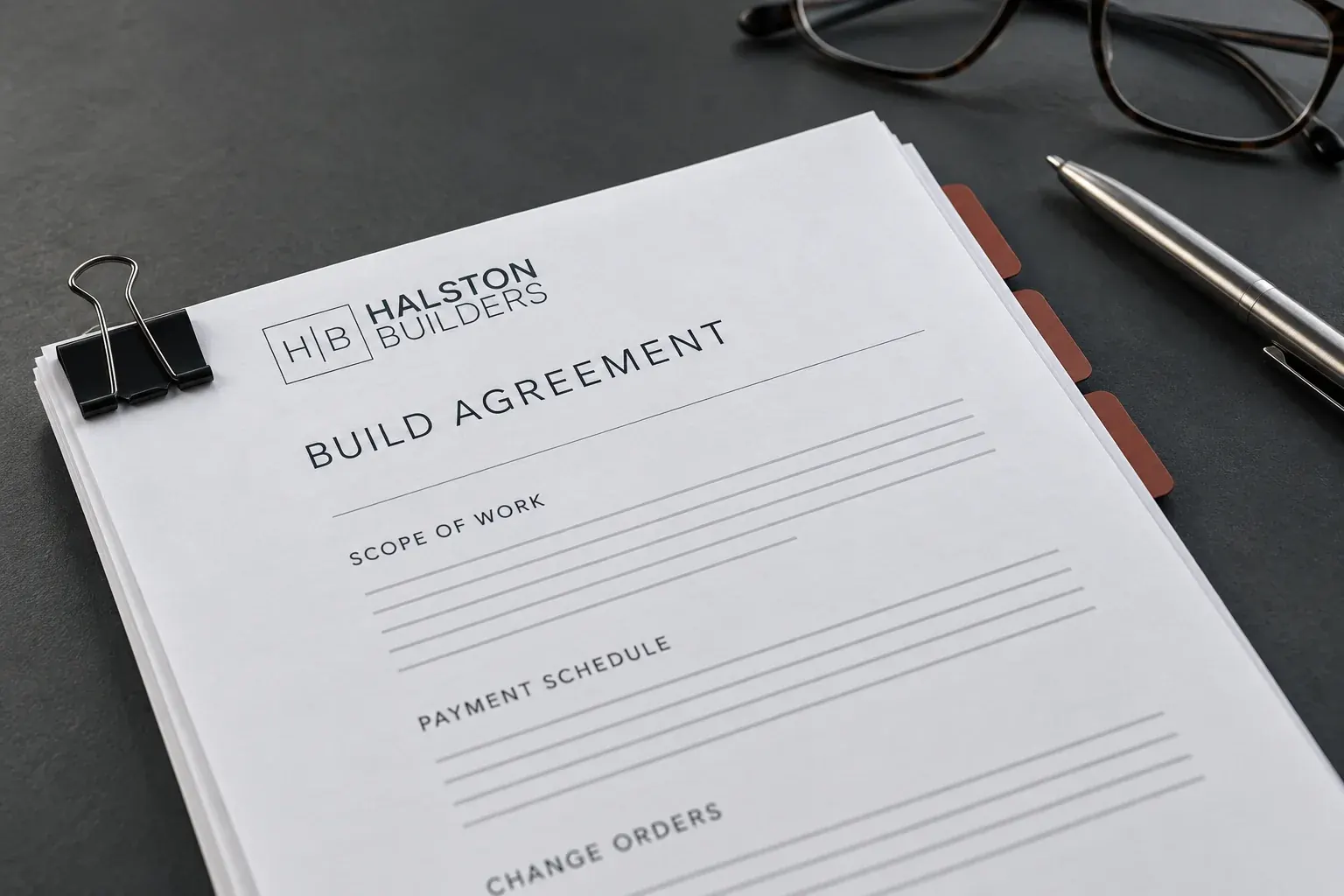
Review a design-build contract's scope, allowances, change orders, schedule and payments. Know which responsibilities and assumptions to clarify before signing.
A construction contract is both a legal agreement and a practical record of scope, responsibilities and how changes will be handled. Read it before committing to the work, while there is time to resolve questions about the drawings, price and schedule.
This is what the substantive parts of one are deciding. It is a builder's explanation rather than legal advice; your attorney should read anything you sign.
The scope should describe the included work clearly and identify exclusions. It should refer to the drawings, specifications and other documents that define what is being priced.
Exclusions are where an honest contract shows itself. Landscaping, window treatments, appliances, audio-visual, furniture, artwork installation, permit fees, utility company charges: each of these is routinely someone's assumption and rarely the same someone's. A contract that lists them as excluded is doing you a favor: you find the gap now instead of in month six.
An allowance is a placeholder for an item that has not been fully selected or priced, such as tile, plumbing fixtures, lighting, hardware or appliances.
The question worth asking is not whether there are allowances but whether they are realistic. An allowance set low makes the contract total look better and guarantees a change order later. Ask what the allowance buys: at this number, what tile could I choose? If the answer is vague, the number is decorative.
Ask also whether the allowance covers material only or material plus labor, because the two are very different numbers, and whether a saving against an allowance comes back to you.
On any renovation of an older house there should be a contingency, it should be a named figure, and the contract should say what it is for and who decides when it gets used.
A contract with no contingency on a hundred-year-old house is not optimistic on your behalf; it transfers the risk to you without saying so. We cover why in what drives renovation cost. The good version is a stated amount, reported against as the job goes, with unused contingency returned to you.
Every project has them. The clause worth reading is the one about process, not price.
It should say that no change proceeds without written approval, that you see the cost and the schedule impact before you approve, and how quickly a change gets priced. The schedule impact is the part people forget: a change that costs little can still move the end date, and a contract that prices changes without stating their effect on the program is only telling you half of it.
Ask for a schedule showing the project phases and the assumptions behind them, including selections and permits. See our renovation timeline guide.
Then ask how you will be told when something changes. A schedule you find out has slipped after it has slipped is not a schedule.
Payments should track work completed rather than the calendar. A draw schedule tied to real milestones keeps the incentives pointed the right way; one tied to dates does not.
If the agreement includes retainage, a portion of payment held until specified work is complete, check the amount and the conditions for release.
Ask what insurance documentation and payment records will be provided. Discuss any requirements for certificates, additional insured status and lien waivers with the professionals advising you on the agreement.
And read the warranty clause: what is covered, for how long, and how you report something. A builder who is comfortable being called back is a builder who expects to still be in business.
The clause we care most about is often the one contracts omit: who decides what, how fast, and what happens when you are away. A single named decision-maker beats a committee, and agreeing that in writing before the job starts is the difference between questions answered in a day and questions that sit for a fortnight.
Read the exclusions. Check what an allowance covers and how contingency is handled. Confirm how changes to cost and timing will be approved, and ask who will lead the project on site.
If a builder is reluctant to walk you through any of that, you have learned something useful for the price of an afternoon.
Request a consultation or read how our design-build process runs.