Westchester County
New York
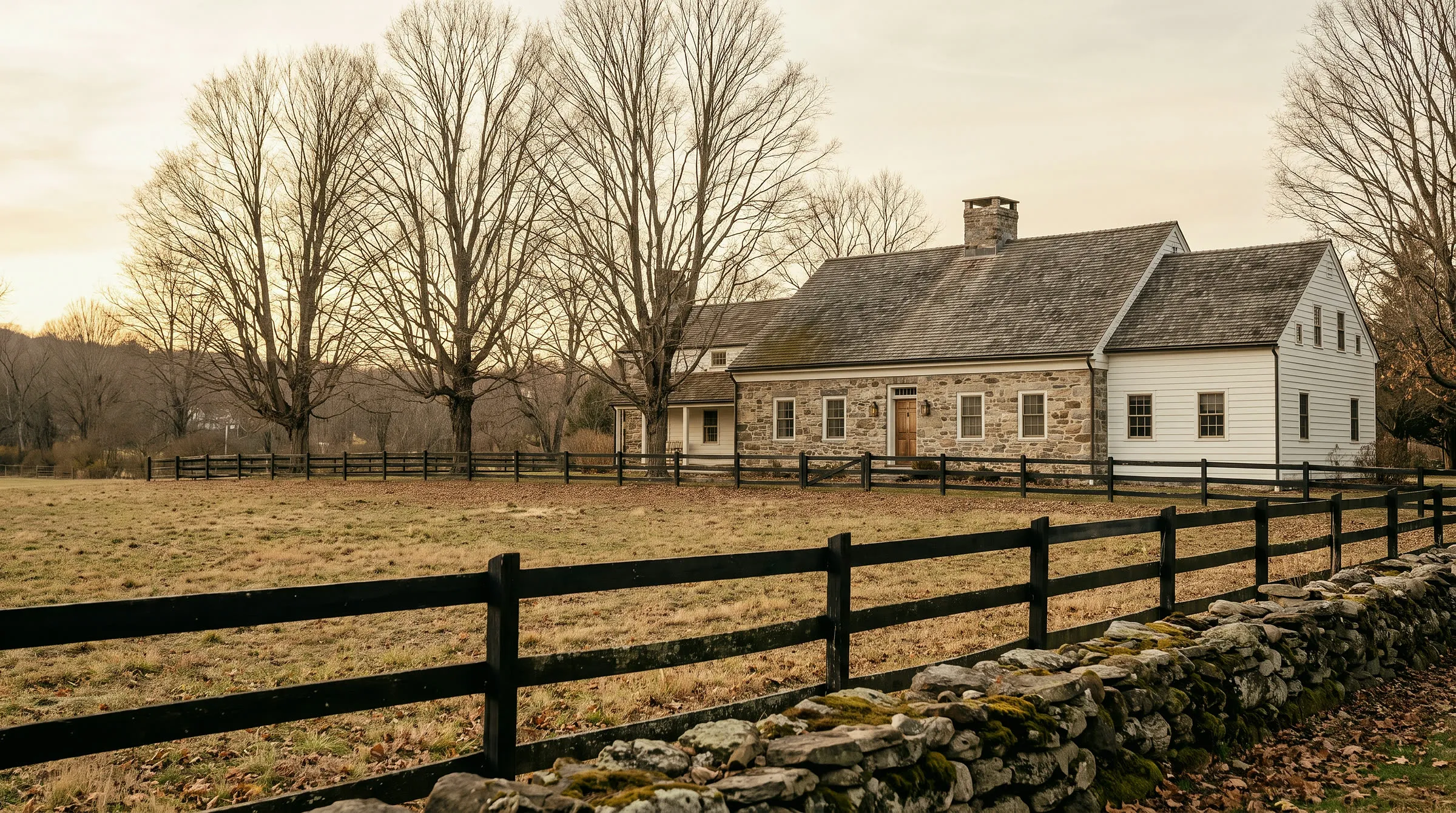
Architecture shown is a design reference, not a documented Halston Builders project in this town. Explore our project portfolio.
Custom homes, renovations and additions across Westchester County, NY, from Rye and Larchmont to Bedford and Pound Ridge, by one owner-led design-build team.
Halston Builders is an owner-led design-build firm working across Westchester County, from Rye and Larchmont on Long Island Sound to Bedford and Pound Ridge in the north. The same team leads each project from the first meeting through the final walkthrough, and our design center is in Bridgeport, Connecticut.
We build custom homes, take on whole-home and gut renovations, and plan and build additions. We renovate kitchens and bathrooms, including tadelakt lime-plaster bathrooms and steam showers, finish lower levels, and build pool houses and accessory structures. Our outdoor living work covers terraces, outdoor kitchens and pool surrounds, and on the Sound we take on waterfront and coastal construction.
On a larger property, the driveway, the septic system, the well and any outbuildings can be part of the scope alongside the house, so we look at them from the start. Our projects page shows finished kitchens, baths, terraces and a lower level.
Westchester has a county government, but the building permit and the land use reviews for a house come from the city, town or village where it sits. The first question on any project is which municipality the property is in, because the boards and their rules differ from one to the next. Items to confirm early:
Boards meet on their own calendars, so their reviews belong in the schedule from the start. Our permit guides for Rye and Bedford, and our articles on permits and approvals, cover the process in more detail.
Each place below has its own page on its houses, approvals and site conditions.
Our design-build process keeps design, approvals, budget and construction with one team, so the municipal, county and watershed reviews are planned from the start. During pre-construction budgeting, we price the design as it develops, which lets you adjust the scope before construction. If you already have an architect, we build to your architect's drawings and join the existing team. The same people stay with the project from the first meeting to the final walkthrough.
The one the property is in, which is not always the place named in the mailing address. A house in Chappaqua is reviewed by the Town of New Castle and one in Armonk by the Town of North Castle, while a house in Larchmont goes to the village. In Rye, confirm whether the house is in the City of Rye or in one of the villages of the Town of Rye, such as Rye Brook or Port Chester.
Possibly, if it is in one of the towns that drain to the city's reservoirs, such as Bedford, New Castle, North Castle or Pound Ridge. The watershed rules cover residential septic systems, paving near streams and, for some projects, a stormwater plan, so we confirm whether they apply before the design is set.
Possibly, but plan for a septic review. The county Health Department reviews and permits septic systems, and in the New York City watershed adding a bedroom counts as an alteration that needs approval under the city's rules. We gather the septic records early so the design reflects what the site can support.
They may, and local rules can apply as well. The state regulates qualifying freshwater wetlands and an adjacent area around them, and tidal wetlands along the Sound, while municipalities such as Bedford and the City of Rye have their own wetland permits. Mapping any wetland before the design is fixed shows where a pool, a driveway or an addition can go.
Ask the municipality early, because it affects the schedule. In Larchmont, the Architectural Review Board reviews all proposed exterior improvements, and Rye has a Board of Architectural Review. If the project includes demolition in Scarsdale, the Committee for Historic Preservation reviews the application first.
Yes. We build in both states, and what changes at the state line is mainly the approvals. Pound Ridge, for example, borders New Canaan and Stamford, but a project there follows New York's municipal, county and watershed rules. The same team runs the work on either side.
Yes. We review the drawings with your architect before pricing and agree at the outset who is responsible for drawings, approvals, selections and site decisions. Our guide to hiring a builder when you already have drawings covers what to bring.
It depends on the scope and whether living areas can be safely separated from construction. We discuss phasing, a temporary kitchen, dust control and access early. Our guide to living in your house during a renovation covers the trade-offs.
We price the design as it develops, so scope decisions are made with cost in view. Site work such as a driveway, a septic system or a well is priced with the house, and the schedule allows for board, county and watershed reviews. Our guide to how long a whole-house renovation takes explains the stages.
We can meet at the house or at our design center at 46 Beatrice St, Unit 2, in Bridgeport, by appointment. Bring any drawings, surveys or septic and well records you have. Request a free consultation.